
Benefits of Raw Local Honey: A Complete Guide
Table of Contents
- What Makes Raw Local Honey Different
- Raw Honey vs Pasteurized Honey: Key Differences
- Health Benefits of Raw Local Honey
- How to Store Raw Honey Properly
- Is Raw Honey Safe for Infants
- The Local Honey Myth: What the Science Shows
- Using Raw Local Honey in Cooking and Baking
- Conclusion
- Frequently Asked Questions
Last Updated: September 4, 2026
What Makes Raw Local Honey Different
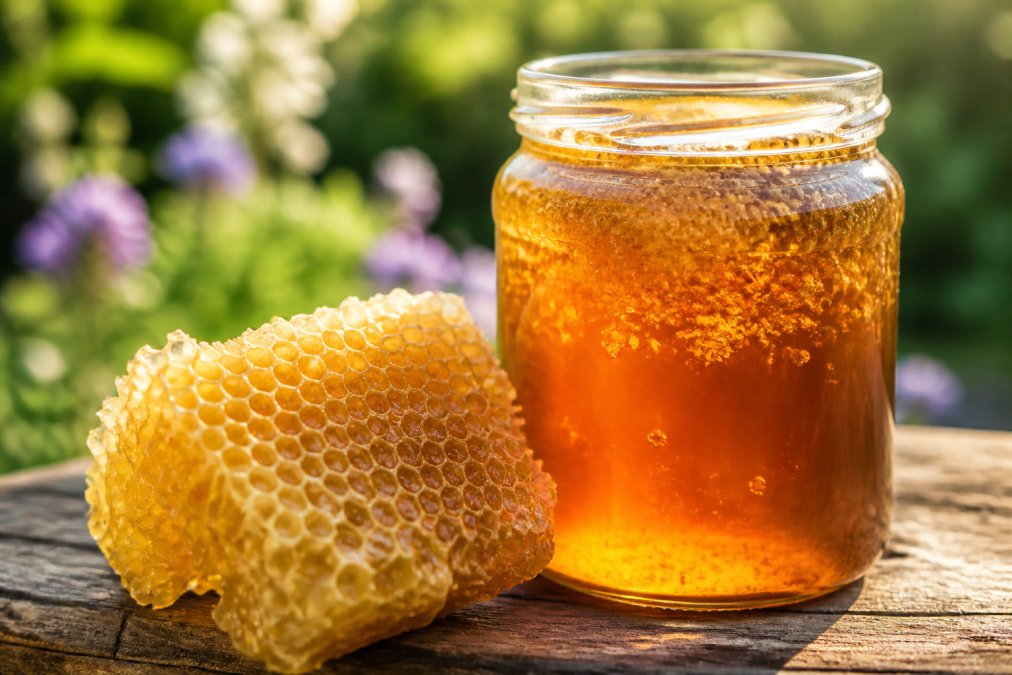
Raw honey is honey that has not been heated above natural hive temperatures or finely filtered, retaining the pollen, enzymes, and phytonutrients that commercial processing strips away. This guide from Gardners Sugarhouse, a family-owned apiary in Sheldonville, Massachusetts, explores the benefits of raw local honey and how to choose, store, and use it well.
At Gardners Sugarhouse, we bottle our raw honey straight from the comb with minimal handling. "Raw" is a processing standard, not marketing. Unpasteurized honey retains glucose oxidase, an enzyme that produces hydrogen peroxide and is responsible for honey's antibacterial effects.
Local honey reflects the specific nectar sources, flowering plants, and seasonal conditions of your region, affecting flavor complexity and pollen profile.
Raw Honey vs Pasteurized Honey: Key Differences
Raw and pasteurized honey differ in heat and filtration. Pasteurization heats honey to roughly 145°F to destroy yeast, while fine filtration removes pollen for a clear, shelf-stable product (the FDA).
Enzyme Content and Processing
Heat above 120°F degrades enzymes that contribute to antimicrobial activity. Filtration removes pollen sought for potential immune benefits. Raw honey retains both enzymes and pollen, preserving its biological complexity.
Crystallization and Shelf Stability
Pasteurized honey stays liquid because heat and filtration remove particles that trigger crystallization. Raw honey crystallizes naturally within weeks or months due to glucose molecules and pollen.
Crystallization is not spoilage but a sign of genuine raw honey. Many consumers mistake it for a defect and discard good honey.
Health Benefits of Raw Local Honey
Raw local honey offers health benefits beyond sweetening, with research examining its antioxidant capacity, antimicrobial activity, and anti-inflammatory effects.
Antioxidants and Phytonutrients
Raw honey contains phenolic acids and flavonoids that neutralize free radicals. Darker honeys like buckwheat contain higher antioxidant levels than lighter varieties. Phytonutrients add additional protective activity.
Antibacterial and Antifungal Properties
Honey's antibacterial activity works through osmosis (dehydrating bacteria), low pH, and hydrogen peroxide production. Research confirms effectiveness against antibiotic-resistant bacteria. Its antifungal properties follow similar mechanisms.
Immune System and Inflammation Support
Honey's antioxidants may modulate inflammatory response and reduce markers like C-reactive protein. Propolis, the resinous substance bees use to seal hives, has demonstrated anti-inflammatory effects in laboratory studies.
Sore Throat and Cough Relief
Clinical research shows honey is as effective as over-the-counter cough suppressants for nighttime cough in children. Its thick consistency coats the throat while antimicrobial properties address underlying irritation.
Wound Healing and Skin Health
Medical-grade honey is used clinically for wound care. Its osmotic effect draws fluid away, acidity inhibits bacteria, and hydrogen peroxide provides antimicrobial action. For minor cuts and burns, raw honey supports healing; processing destroys active components.
How to Store Raw Honey Properly
Proper storage preserves raw honey's beneficial properties. Honey is naturally shelf-stable due to low moisture and acidity, but improper storage degrades quality.
Temperature and Container Best Practices
Store honey in a tightly sealed glass jar at room temperature (60-75°F). Avoid refrigeration, direct sunlight, and heat sources, which degrade enzymes. Glass is preferable to plastic.
Handling Crystallization
When raw honey crystallizes, place the sealed jar in a warm water bath at no more than 110°F until crystals dissolve. Avoid microwaving, which destroys enzymes and antioxidants.
Is Raw Honey Safe for Infants
Raw honey is not safe for infants under 12 months. Honey can contain Clostridium botulinum spores, which infants' immature digestive tracts cannot handle.
Infant botulism is rare but serious, and the Centers for Disease Control and Prevention guidance on infant botulism is unequivocal: do not give honey to children under one year old. This applies to all honey, raw or pasteurized, because the spores survive both heating and filtration. Once a child passes their first birthday, the risk resolves and honey becomes safe to introduce.
The Local Honey Myth: What the Science Shows
A persistent claim is that local honey relieves seasonal allergies through pollen exposure. The science does not support this. Allergy-triggering pollen comes from wind-pollinated plants like ragweed; honey contains pollen from bee-pollinated flowers, which is heavier and less allergenic.
A 2002 study in the Annals of Allergy, Asthma and Immunology compared local honey, commercially processed honey, and placebo for allergy relief and found no significant difference between the groups. The American College of Allergy, Asthma and Immunology position on honey for allergies confirms that honey has not been proven effective for allergy symptoms. This does not diminish the other benefits of raw local honey, but it is honest to separate marketing claims from what the evidence actually shows.
What "Local" Actually Means
"Local" has no legal definition. A jar labeled "local" may be from 100 or 500 miles away or a blend from multiple regions. Source directly from the producer and ask: What is the exact geographic area your bees forage? What are the primary nectar sources?
A genuine local producer can tell you which plants were blooming during harvest. This specificity affects flavor, color, and nutrient profile, reflecting terroir like wine.
The Real Benefits of Buying Local
The legitimate value of local honey lies in three areas:
Ecosystem Support. Local beekeepers pollinate regional crops. A single colony can pollinate 300 million flowers daily. Purchasing from local producers supports pollination services that feed your region.
Freshness. Local honey purchased directly is often weeks old, retaining higher enzyme levels than supermarket honey that may be months or years old.
Transparency. Local producers can tell you exactly how honey was handled, heat, filtration, bottling time. Commercial distributors may blend, heat, or filter aggressively.
How to Source Genuinely Local Honey
Farmers markets are the most reliable source. Speak directly with the beekeeper and ask for their apiary address. Co-ops and natural food stores sometimes carry local honey, but verify sourcing with the manager. Contact your county extension office or local beekeeping association for registered beekeepers. What matters is freshness, minimal processing, and knowing the producer, not geography alone.
Using Raw Local Honey in Cooking and Baking
Raw honey performs differently in recipes than sugar. Heat destroys the enzymes and antioxidants that make raw honey valuable. Understanding when to use raw versus regular honey is essential for both culinary results and health benefits.
The Heat Problem: Preserving Enzymes During Cooking
Glucose oxidase begins degrading above 120°F. Antioxidants like phenolic compounds and flavonoids are heat-sensitive, with measurable losses above 140°F.
This creates a dilemma: heating raw honey destroys its health benefits. The solution is to use raw honey strategically.
Use raw honey unheated: Drizzle over oatmeal, yogurt, or fruit. Stir into tea or warm water. Use in salad dressings, marinades, and cold sauces. These preserve full enzyme and antioxidant profile.
Use pasteurized honey for baking and cooking: For sustained heat above 140°F, use pasteurized honey. Save raw honey for unheated applications.
Warm gently if needed: Keep temperature below 110°F using a warm water bath. Remove from heat immediately.
Substitution Ratios and Recipe Adjustments
Use about two-thirds to three-quarters cup of honey for every cup of sugar. Reduce recipe liquid by one-quarter cup for each cup of honey used.
Honey browns faster than sugar; lower oven temperature by 25°F to prevent over-browning. Its acidity reacts with baking soda for leavening in quick breads. For savory dishes, honey pairs well with mustard, citrus, and warm spices.
Practical Applications by Temperature
Cold/room-temperature (preserve all enzymes): Salad dressings, marinades, smoothies, yogurt toppings, no-bake desserts.
Warm under 110°F (minimal loss): Warm tea, milk, water with lemon.
Moderate heat 110-140°F (partial loss): Warmed sauces, glazes applied after cooking.
High heat above 140°F (significant loss): Baking, roasting, simmering. Use pasteurized honey.
Conclusion
The benefits of raw local honey are real, but depend on choosing genuinely unprocessed honey, storing it correctly, and using it thoughtfully. Seek out producers who can tell you exactly how their honey is handled. Gardners Sugarhouse bottles raw honey from our own hives in an FDA-registered facility, using traditional methods. Quality raw honey rewards you with flavor and function that supermarket shelves cannot match.
Frequently Asked Questions
Is a spoonful of raw honey a day good for you?
A daily spoonful of raw local honey can support your health through its antioxidants, enzymes, and antibacterial properties. Raw honey contains phenolic acids and flavonoids that help reduce inflammation and support immune function. For most adults, one spoonful daily is safe and may provide cumulative benefits. However, individual needs vary, consult your healthcare provider if you have specific health conditions or take medications that interact with honey.
What's the difference between raw honey and pasteurized honey?
Raw honey is unpasteurized and unfiltered, preserving enzymes, pollen, and phytonutrients that are destroyed by heating. Pasteurized honey undergoes heat treatment to prevent crystallization and extend shelf life, but this process eliminates beneficial enzymes and reduces antioxidant activity. Raw honey may crystallize over time due to its natural glucose content, while pasteurized versions stay liquid longer. Raw honey retains more of honey's original nutritional profile and health-supporting compounds.
How should I store raw honey to keep it fresh?
Store raw honey in an airtight container at room temperature, away from direct sunlight and moisture. A cool, dark pantry is ideal. Raw honey naturally crystallizes over time due to its fructose and glucose content, this is normal and doesn't indicate spoilage. If crystallization occurs, gently warm the jar in warm water (not boiling) to restore its liquid state. Properly stored raw honey can last indefinitely without refrigeration, thanks to its natural antimicrobial properties and low moisture content.
Is raw honey safe for babies under one year old?
Raw honey is not safe for infants under 12 months old due to the risk of botulism, caused by Clostridium botulinum spores. While rare, these spores can produce toxins in an infant's developing digestive system. Pasteurized honey is also not recommended for infants under one year. After age one, an infant's digestive system is mature enough to safely handle raw honey. Always consult your pediatrician before introducing honey or any new food to your baby.
Choosing the right honey means looking past the supermarket shelf and finding producers who respect the craft. At Gardners Sugarhouse, our small family operation in Sheldonville, Massachusetts, offers raw honey and wood-fired maple products made the traditional way. Explore our selection and taste the difference that honest production makes.
This article was written using GrandRanker